Makes 10-12 servings
INGREDIENTS
|
Showing posts with label Pluots. Show all posts
Monday, July 23, 2012
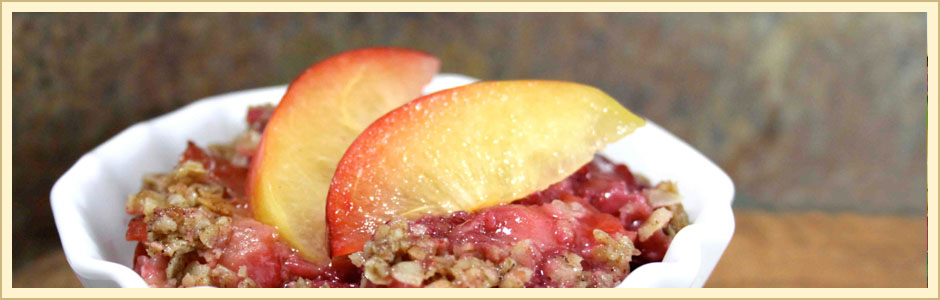
Tangy Pluot Crisp
Labels:
Pluots
Wednesday, June 13, 2012
Pluot Raspberry Pie
Weird things happen when a boy plum tree falls in love with a girl apricot tree. Their children produce strange looking fruit with tannic tasting skin and pretty red hued flesh. Unlike an American marriage where the female often takes the last name of the male, the plum tree and apricot tree keep their names, but combine them together for their spotty fruit offspring.
Or maybe pluots are just a crazy cross pollination idea from the brain of Floyd Zaiger, a Modesto California fruit breeder. At least he named them something fun, “Ploooooo-ought” rolls off the tongue like an odd foghorn, and is much more exciting to say than “aprium”.
So it’s come to be, the fruit with the silly name jumps into my Costco cart. Not having a clue what to do with these strange love children, I baked them into a pie, throwing in a cup of raspberries for brightness.
The result is a puckery sweet tart pie with a beautiful red color. Perfect with a cup of coffee for breakfast.
Ingredients
Or maybe pluots are just a crazy cross pollination idea from the brain of Floyd Zaiger, a Modesto California fruit breeder. At least he named them something fun, “Ploooooo-ought” rolls off the tongue like an odd foghorn, and is much more exciting to say than “aprium”.
So it’s come to be, the fruit with the silly name jumps into my Costco cart. Not having a clue what to do with these strange love children, I baked them into a pie, throwing in a cup of raspberries for brightness.
The result is a puckery sweet tart pie with a beautiful red color. Perfect with a cup of coffee for breakfast.
Ingredients
3 cups skinned and thickly sliced ripe pluots (About 5 or 6 )
1 cup fresh or frozen raspberries
1/3 cup cornstarch
1 cup granulated sugar
1 Tablespoon butter, cut into small pieces
1 box purchased pie crusts, or make your own double crust
1 egg white
1 (9 inch) pie dish, not the deep dish kind
Instructions
1. To remove the skins: Bring a pot with enough water to cover the pluots to a boil. Set aside a large bowl of ice water. Drop the pluots in the water for about 30 seconds and move to the ice water for a couple of minutes.
2. Pre-heat the oven to 400 degrees.
3. Thickly slice the pluots into a large bowl. Add the frozen raspberries. Stir together the cornstarch and sugar in a separate bowl. (If you don’t do this you’ll have starch clumps). Add the sugar mixture to the fruit and mix gently. Set aside.
4. Roll out the pie crusts just slightly between two sheets of wax paper. This will make them prettier. Transfer one to the pie dish and brush completely with a little egg white mixed with a small splash of water. Pour in the fruit, dot with butter if desired, and top with the second crust. Press the edges together and flute the pie tucking the edges into the pie dish. Poke some holes in the top of the dough the pie with a knife to vent.
5. Bake the pie for 30 minutes. Then turn the heat down to 375 degrees and bake for 30 more minutes or until the bottom of the crust looks lightly browned. You can use a pie shield after the first 30 minutes of baking so the edges don’t burn. Also, sticking a foil covered baking sheet under the pie during the last 30 minutes will help with any run over.
Recipe by Laura Flowers
1 cup fresh or frozen raspberries
1/3 cup cornstarch
1 cup granulated sugar
1 Tablespoon butter, cut into small pieces
1 box purchased pie crusts, or make your own double crust
1 egg white
1 (9 inch) pie dish, not the deep dish kind
Instructions
1. To remove the skins: Bring a pot with enough water to cover the pluots to a boil. Set aside a large bowl of ice water. Drop the pluots in the water for about 30 seconds and move to the ice water for a couple of minutes.
2. Pre-heat the oven to 400 degrees.
3. Thickly slice the pluots into a large bowl. Add the frozen raspberries. Stir together the cornstarch and sugar in a separate bowl. (If you don’t do this you’ll have starch clumps). Add the sugar mixture to the fruit and mix gently. Set aside.
4. Roll out the pie crusts just slightly between two sheets of wax paper. This will make them prettier. Transfer one to the pie dish and brush completely with a little egg white mixed with a small splash of water. Pour in the fruit, dot with butter if desired, and top with the second crust. Press the edges together and flute the pie tucking the edges into the pie dish. Poke some holes in the top of the dough the pie with a knife to vent.
5. Bake the pie for 30 minutes. Then turn the heat down to 375 degrees and bake for 30 more minutes or until the bottom of the crust looks lightly browned. You can use a pie shield after the first 30 minutes of baking so the edges don’t burn. Also, sticking a foil covered baking sheet under the pie during the last 30 minutes will help with any run over.
Recipe by Laura Flowers
Labels:
Pluots
Pluots
Current Facts
Pluot is the registered trademark name given to a stonefruit that was developed by Floyd Zaiger of Zaiger Genetics in 1989. Zaiger developed the original pluot from a plum and apricot variety. Zaiger develops all of his hybrid fruits by hand pollination versus genetic modification. The attention and care taken to create a pluot from parent varieties is painstakingly precise and even artful. Floyd Zaiger created the original pluots under extreme temperature control, transferring pollen from one fruit to the next with a tweezers fit for a lab. Dino Egg is also a trademarked name given to this specific pluot, which by virtue of the complex hybridization process becomes its own individual variety.
Description/Taste
Dino Egg pluots are one of the more unique pluots. Pluots, in general, have the appearance of a plum, are extremely sweet low-acid fruits with a juicy, tender firm flesh. The Dino Egg is a sub-acid pluot with a thin, smooth green speckled purple skin that clings to its juicy, firm, ruby-colored pitted flesh with flavors both sweet and bright.
Applications
Pluots pair well with pork, lamb and crudo-style fish and shellfish. They make delicious compotes, ice creams and reductions. Complimentary flavors are vanilla, nutmeg, tropical fruits, citrus and chile. To store fresh plums, refrigerate ripe fruit only a few days.
Geography/History
Pluots are the result of grafting apricot trees onto plum tree rootsock. The ratio of hybridization is generally 70% plum and 30% apricot, though it could be 60% plum and 40% apricot, so the rule of thumb is more plum than apricot. The result is a fruit which draws on the best qualities of its parents to create a fruit that is perhaps better than its origins - much like technology, improving upon its previous carnation. Pluots thrive in regions such as the San Joaquin Valley, where winter time temperatures are cool but not cold and the summer season is long, warm and dry.
Source: http://www.specialtyproduce.com/produce/Pluots_747.php
Pluot is the registered trademark name given to a stonefruit that was developed by Floyd Zaiger of Zaiger Genetics in 1989. Zaiger developed the original pluot from a plum and apricot variety. Zaiger develops all of his hybrid fruits by hand pollination versus genetic modification. The attention and care taken to create a pluot from parent varieties is painstakingly precise and even artful. Floyd Zaiger created the original pluots under extreme temperature control, transferring pollen from one fruit to the next with a tweezers fit for a lab. Dino Egg is also a trademarked name given to this specific pluot, which by virtue of the complex hybridization process becomes its own individual variety.
Description/Taste
Dino Egg pluots are one of the more unique pluots. Pluots, in general, have the appearance of a plum, are extremely sweet low-acid fruits with a juicy, tender firm flesh. The Dino Egg is a sub-acid pluot with a thin, smooth green speckled purple skin that clings to its juicy, firm, ruby-colored pitted flesh with flavors both sweet and bright.
Applications
Pluots pair well with pork, lamb and crudo-style fish and shellfish. They make delicious compotes, ice creams and reductions. Complimentary flavors are vanilla, nutmeg, tropical fruits, citrus and chile. To store fresh plums, refrigerate ripe fruit only a few days.
Geography/History
Pluots are the result of grafting apricot trees onto plum tree rootsock. The ratio of hybridization is generally 70% plum and 30% apricot, though it could be 60% plum and 40% apricot, so the rule of thumb is more plum than apricot. The result is a fruit which draws on the best qualities of its parents to create a fruit that is perhaps better than its origins - much like technology, improving upon its previous carnation. Pluots thrive in regions such as the San Joaquin Valley, where winter time temperatures are cool but not cold and the summer season is long, warm and dry.
Labels:
Pluots
Subscribe to:
Posts (Atom)
